Contacts and companies
Every customer, lead, and site in one place, with full history attached. Search by name, phone, address, or job.
Custom CRM
Most service businesses don't need Salesforce, and the per-user platforms charge every month for features you half use. What you need is one system where every customer, quote, and job lives, matched to how you already work. That's what we build: a custom CRM scoped to what you actually need, and owned by you when it's done. Builds are fully remote, so it works the same whether you're in Surrey or Sudbury.
Your data is hosted in Canada.
Features
Every build is different. These are the pieces we combine most often. You pick what the first version needs, and we leave room to add the rest later.
Every customer, lead, and site in one place, with full history attached. Search by name, phone, address, or job.
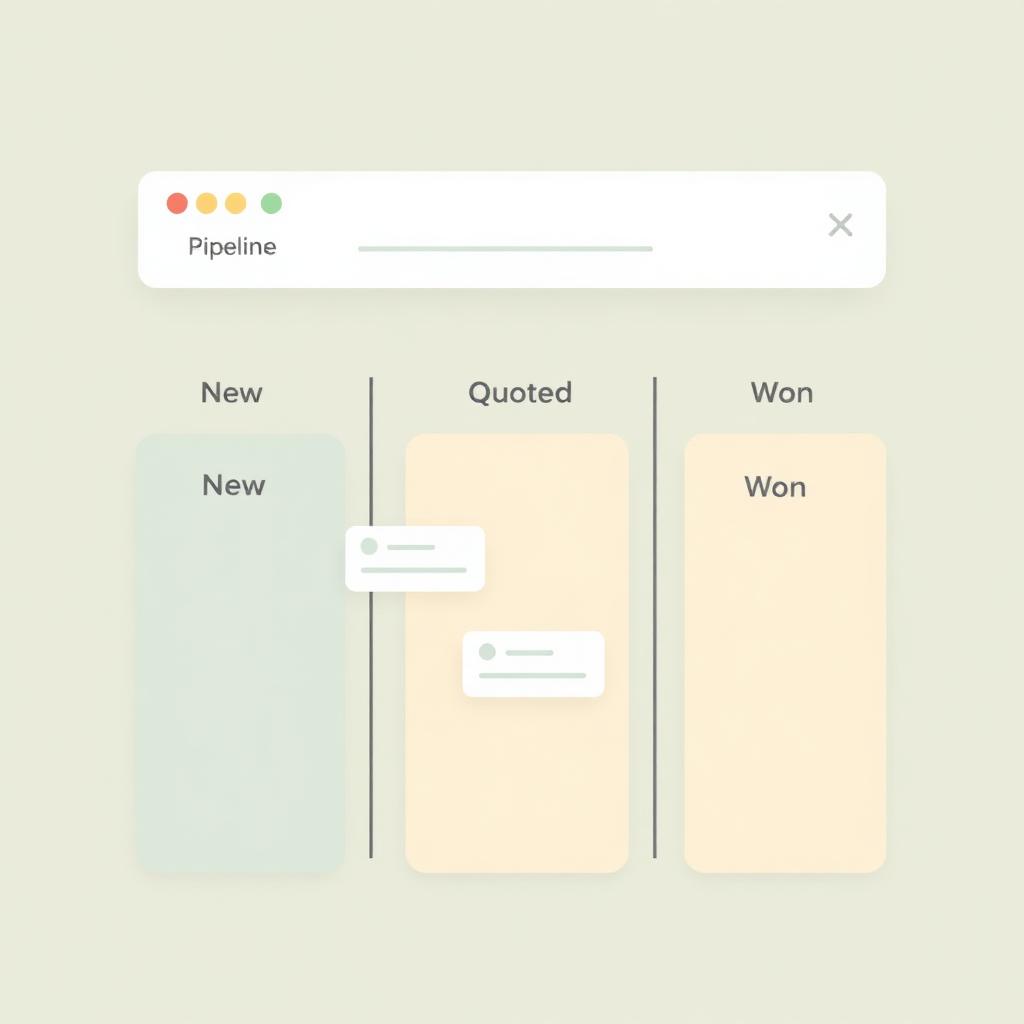
Move leads through your real stages, from new inquiry to quoted to won. See what's stuck and what's worth chasing.
Send quotes, track approvals, and let the system nudge customers who have gone quiet.
Turn a won quote into a job with its own checklist, assignee, and due date.
Photos, documents, and call notes attached to the customer record instead of buried in someone's phone.
Instant replies to new leads, booking confirmations, status updates, and reminders that go out on their own.
A live view of leads, quotes, revenue, and workload, for this week and this month.
Office staff, field techs, and owners each see what they need. You decide who can edit what.
Reporting
A CRM you own can report on anything it stores. Most owners start with the same questions. How many open quotes are out there? What did we invoice this month? Which lead sources turn into paying work, and which just make the phone ring? We build the dashboard around your questions instead of a template.
If you live in spreadsheets today, we keep an export path open, so month-end still works the way your bookkeeper expects.
Migration
Most of our builds start from a spreadsheet, or five of them. We import your existing data, clean up the duplicates, and map your columns to real fields, so your history comes with you. The sheet only one person really understands finally gets retired.
The same goes for an old CRM you've outgrown or stopped trusting. We export what matters and leave the rest behind.
Who it's for
A simple CRM for a small team looks different in every trade. These are the industries we know best.
Booking, dispatch, job tickets, and automatic 'your technician is on the way' texts.
See this industryInstall and repair quotes, site visits, photos on every job, and follow-ups on aging quotes.
See this industryIntake, job tickets, quote approvals, and automatic status updates that stop the 'any news?' calls.
See this industryQuote requests, proof approvals, a job status board, and easy reorders for repeat customers.
See this industryLead to site visit to quote to invoice, with photos attached and nothing lost between stages.
See this industryRecurring jobs, crew assignment, customer notifications, and simple quote follow-ups for cleaning, landscaping, and moving companies.
See this industryHow we work
One call. We map how a customer moves through your business today and where things get dropped.
You get a short plan: screens, pipeline stages, user roles, and what version one includes. You approve it before we build.
We build fast, with human review and testing at every step. You see progress, not a black box.
You run it with real customer data for a week. We adjust fields, wording, and workflow until it fits.
We launch, show your team how to use it, and improve it based on how you actually work in it.
Ownership
You own the code, the database, and the data. We set most clients up on Canadian hosting, and there are no per-user licenses to buy as you hire. If you want us to keep improving the system, our care plan covers hosting, small changes, and new automations for a flat monthly fee. If you'd rather take it in-house, we hand over clean code and documentation and wish you well.
FAQ
Scope drives it: how many user roles, which integrations, portal or no portal. The pricing page explains the ranges and what moves them.
Yes. Integrations are usually part of the first build, not an afterthought.
You hold the code and the data, so any developer can pick it up. Nothing about your system depends on us staying in business.
No. Most clients arrive with a pain, not a spec. The discovery call is where the spec comes from.
One short call. We'll map your current workflow, point at the leaks, and tell you what a first version would include.