When to stop renting CRM software and build your own
Most CRM SaaS is fine - until it isn't. Here are the specific signals that you've outgrown the rental model and the math is now on the side of owning your own.
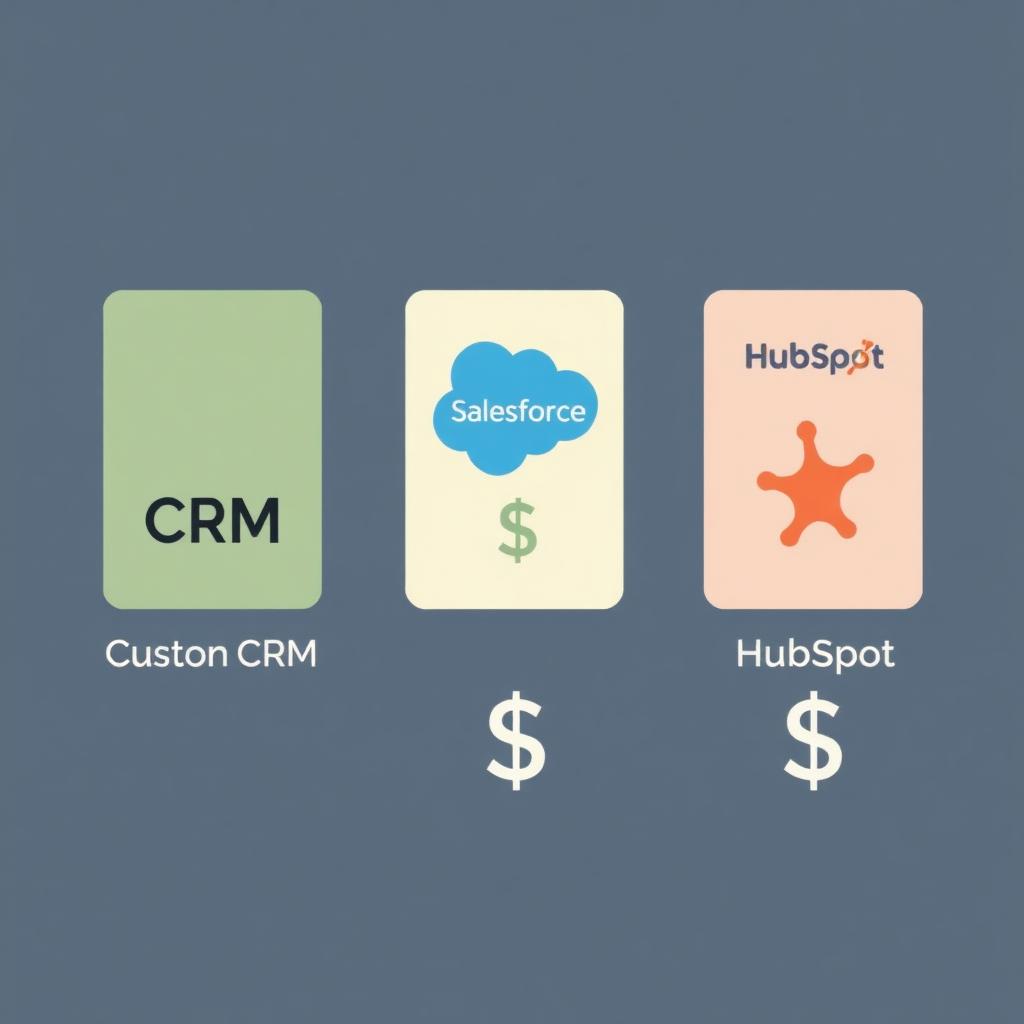
Renting CRM software (Salesforce, HubSpot, Pipedrive, Monday, Airtable, Jobber, you name it) is the right call for a lot of small businesses. Low upfront cost, no build risk, immediately usable. The trouble starts when you've outgrown the model and don't realize it yet. Here are the signals.
1. The monthly bill has crept past $500-1000
Per-seat pricing is invisible while you're small. By the time you're 8-15 seats with two or three add-ons, the bill is often $800-2,000/month - $10,000-25,000/year, every year, forever. At that point a one-time custom build paying itself back in 18-30 months becomes the obviously cheaper option.
2. You're working around the tool, not with it
Custom views you can't quite build. Workflows that almost fit. Spreadsheet exports every month to get the report the owner actually wants. Every workaround is a quiet signal that the tool is wrong for the work.
3. Per-seat pricing is discouraging hiring
Owners we talk to often won't say it out loud, but they hesitate to add a seat for a new hire because the SaaS bill goes up. That's the model working as designed - against you.
4. Your data is locked in someone else's database
You can usually export. But you can't restructure, you can't query freely, and you can't build the report you want without the platform's permission. The platform owns the shape of your data, even though it's about your customers.
5. The roadmap doesn't include what you need
You've asked for the feature. Support said 'it's on the roadmap.' That was 18 months ago. Your business is changing faster than the vendor's release schedule, and there's nothing you can do about it.
6. You've stacked 2+ paid integrations to make it fit
Zapier, Make, a custom Zap, a third-party reporting tool, a per-seat add-on for one specific workflow. Each one solves a real problem. Together they're a fragile stack that breaks quietly and costs as much as a custom build over time.
7. The team avoids the CRM
This is the loudest signal. If staff are entering data into the CRM as a chore at the end of the day instead of using it during the work, the tool has already failed. A CRM that doesn't match the workflow is a CRM nobody uses.
What 'building your own' actually means
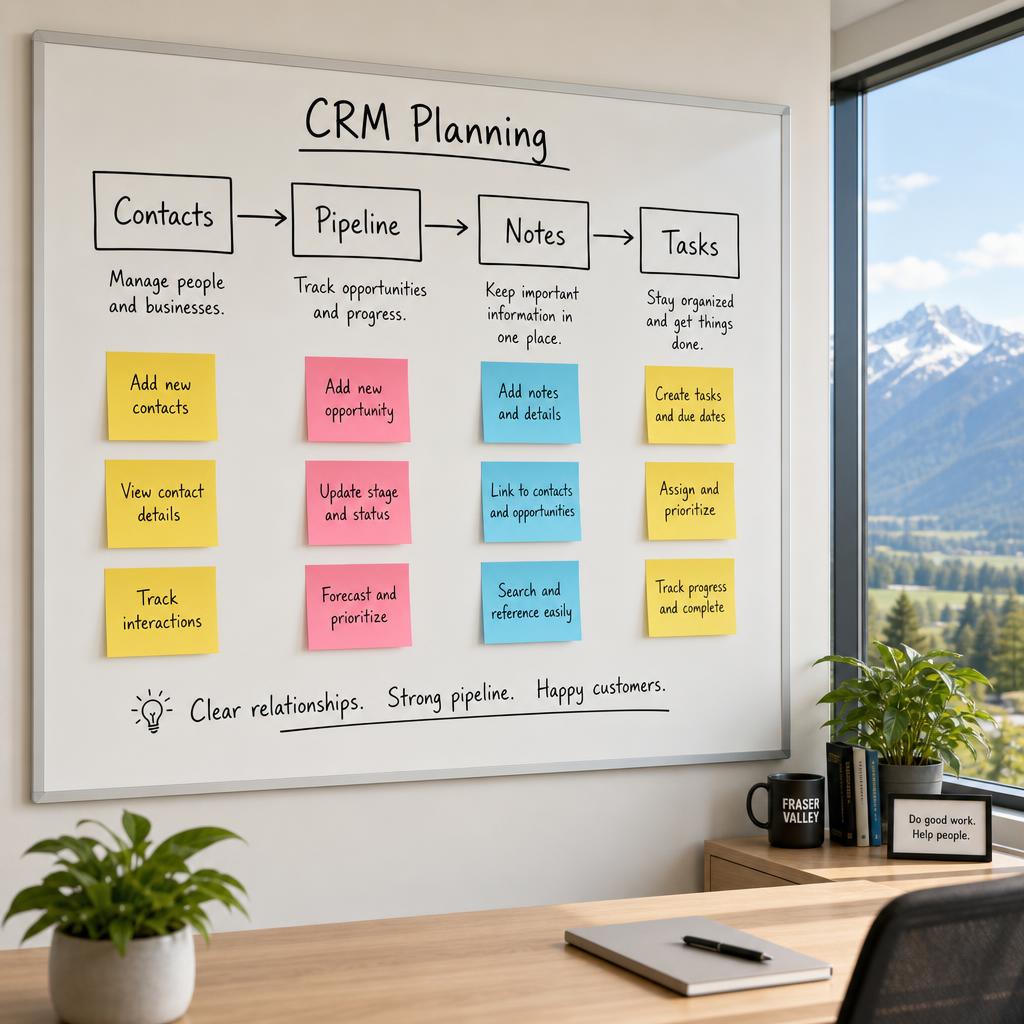
A custom-built CRM for a small BC business isn't a year-long enterprise project. The kind we build is sized to one operation, focused on the 4-6 workflows that matter, and ready to use in 8-16 weeks. You own the code, the database, and the data. No per-seat fees. The bill stops when the build does.
When to stay where you are
If you're under 5 seats, your bill is under $400/month, and your team genuinely uses the tool, stay. The math doesn't work yet, and the SaaS option is doing exactly what it's good at: getting you to your next stage cheaply.
Where to start if it's time
Don't shop for another big platform. Spend 30 minutes writing down how your customer information actually flows today - first call to repeat job. That single page is the brief for the CRM that would finally fit. We can take that brief, scope a custom build against it, and give you a real cost comparison vs your current monthly bill in one call.
For a lot of BC small businesses we work with, the answer to 'should we keep renting our CRM?' is yes - for now. For the ones where it isn't, the move to owned software is one of the highest-return decisions they make in the year they make it.